 English
 中文简体
 русский
 عربى


Home · News · Industry News · PV Potting Sealant Performance in Hot and Humid Solar Environments
Industry News
PV Potting Sealant Performance in Hot and Humid Solar Environments
Nov 23,2026PV Potting Sealant is an important consideration for photovoltaic junction boxes installed in regions with high temperatures, heavy rainfall, and persistent humidity. For solar component manufacturers, these environmental conditions create practical challenges. Moisture may affect internal electrical connections, while repeated temperature changes can place stress on the cured potting material. A compound that performs well during initial assembly may still require further evaluation under long-term environmental exposure. As a manufacturer, we recommend assessing material properties together with the actual working conditions of the finished solar components.
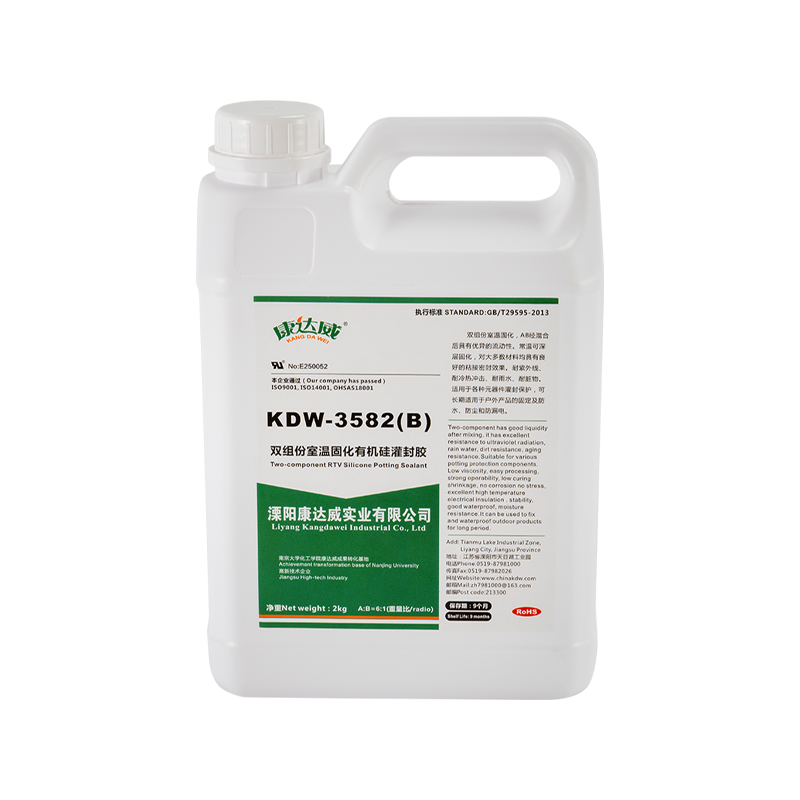
Humidity Exposure Can Affect Internal Protection
Solar installations in coastal and tropical regions often face prolonged humidity and frequent rainfall. If moisture enters a junction box through an imperfect seal, it may contribute to corrosion and electrical insulation problems.
When selecting a potting material, buyers should examine water resistance, adhesion, and insulation stability after moisture exposure. The compatibility between the compound and junction box housing is equally important. A material should maintain suitable bonding with the surrounding surfaces rather than simply filling the available space.
High Temperatures Place Stress on Potting Materials
Junction boxes can become hot during normal solar module operation, particularly when modules receive strong sunlight and have limited ventilation.
High-temperature exposure may influence material hardness, flexibility, and adhesion. Engineering teams should therefore check the recommended service temperature range and thermal aging performance before selecting a formulation.
For projects in hot climates, consider these factors:
- Resistance to prolonged heat exposure.
- Stability of electrical insulation properties.
- Changes in hardness after thermal aging.
- Adhesion to housing materials under temperature stress.
Testing should reflect the expected operating environment rather than relying exclusively on room-temperature samples.
Thermal Expansion Can Cause Bonding Problems
A photovoltaic junction box contains several materials, including plastic housing, copper terminals, cables, and potting compounds. These materials may expand and contract at different rates as temperatures change.
If the cured compound is too rigid for the application, repeated thermal movement may place additional stress on bonded surfaces. A more flexible formulation may be appropriate where movement and stress absorption are important.
However, flexibility should not be considered separately from mechanical protection and insulation requirements. The complete assembly needs to be evaluated to determine whether the selected material provides a suitable balance.
Selecting the Right Formulation for Outdoor Applications
Silicone, polyurethane, and epoxy potting systems offer different performance characteristics. Silicone is commonly considered for applications requiring flexibility and temperature resistance. Polyurethane may be selected when a balance of flexibility and mechanical protection is needed, while epoxy can suit applications requiring a more rigid cured structure.
Before making a purchasing decision, manufacturers should compare:
- Viscosity and dispensing behavior.
- Curing conditions and working time.
- Final hardness and elongation.
- Adhesion to housing and cable materials.
- Moisture resistance and thermal performance.
The right choice depends on junction box design, assembly conditions, and project specifications.
Curing Conditions Need Consistent Control
Environmental conditions inside the factory can also influence potting quality. Temperature, humidity, mixing accuracy, and material storage conditions may affect the curing process.
For two-component systems, operators should follow the specified mixing ratio and recommended curing procedure. Materials should also be stored according to supplier instructions, with attention to shelf life and packaging integrity.
A controlled process helps prevent uneven curing, soft areas, and inconsistent finished products.
Testing Before Shipping Solar Components
For manufacturers supplying international markets, environmental testing can provide useful information about material performance. Rather than evaluating the potting compound in isolation, testing should include the complete junction box assembly.
Relevant checks may include humidity exposure, thermal cycling, insulation performance, adhesion, and visual inspection after aging. The testing program should follow the applicable requirements for the intended photovoltaic product.
This approach allows engineering and purchasing teams to identify potential compatibility issues before large production orders are placed.
Building Reliable Protection for Different Climates
Solar component manufacturers serve markets with different temperature and humidity conditions. A formulation suitable for one project may not automatically meet the requirements of another. Material selection should therefore consider local climate, housing design, electrical specifications, and factory processing conditions together.
As a manufacturer, we encourage buyers to discuss these details before confirming bulk orders. Selecting suitable PV Potting Sealant helps protect junction box components against environmental exposure while supporting consistent production and dependable photovoltaic module operation.
Contact Us
Your email address will not be published. Required field are marked*
Categories
- Company News(1)
- Industry News(11)
Product Category

Solar Solutions
rye@chinakdw.com
-

Call support 24/7 (Whatsapp)
+86 0519 87985926 -

Send us Email
rye@chinakdw.com -

Visit our location
No.789 Chengdong Avenue, Guxian Street, Liyang City, Jiangsu Province, China
-

-
Subscribe to newsletter
Get exclusive news and offers with our newsletter.
